
Rolling into Dataspace
Chapter 6 - a shakedown cruise through previous life (October, 1983)

I would live all my life in nonchalance and insouciance
Were it not for making a living, which is rather a nouciance.
—Ogden Nash
My first sensation after the initial shock was a dizzying and unfamiliar freedom. I stood quietly as the festivities evaporated around me, realizing that I could do whatever the hell I pleased and that nobody would care.
I had broken the chains that bound me to my desk, then sold the desk and torn down the walls. They were falling away even as I stood there in Eagle Creek Park; they were crumbling to rubble so fast that I experienced a sort of vertigo. My familiar walls… they were gone.
I struggled to grasp the boundaries of the new space I had created for myself. My world was no longer limited by the constraints of time and distance — nor even responsibility. That thought was both delicious and unsettling, and I suddenly realized, alone in this unfamiliar city, that I was as close to “home” as I would be for a long time.
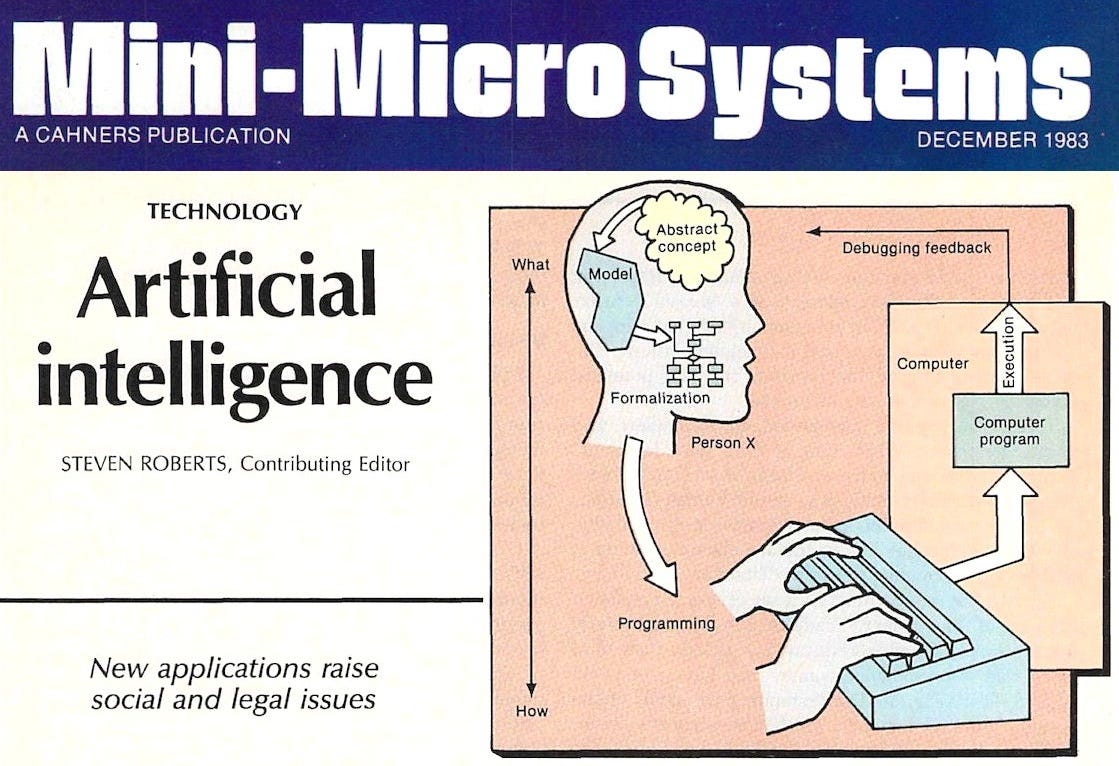
I rode slowly away, thinking about the article that had to be in Boston by 9:00 the next morning. A comprehensive overview of artificial intelligence research, tailored to an engineering-management audience? I shook my head, cruising slowly, a high-tech Sunday driver drifting through the park. A trade journal article? I didn’t even know where I’d spend the night, much less where I’d set up a place to work.
I stopped to ponder the problem, fishing a rumpled napkin out of my pocket to check the crude map someone had drawn for me. There was more than one level on which I was disoriented. I was staring at the smudged lines when a trim man on a racing bicycle glided to a silent stop beside me.
“Lost?” He chuckled at the napkin.
“Well, sort of…”
“You had lunch yesterday at the Bob Evans down by the airport, didn’t you?” He gestured vaguely over his shoulder.
“Uh, yes, how’d you know that?” I struggled to recall his face.
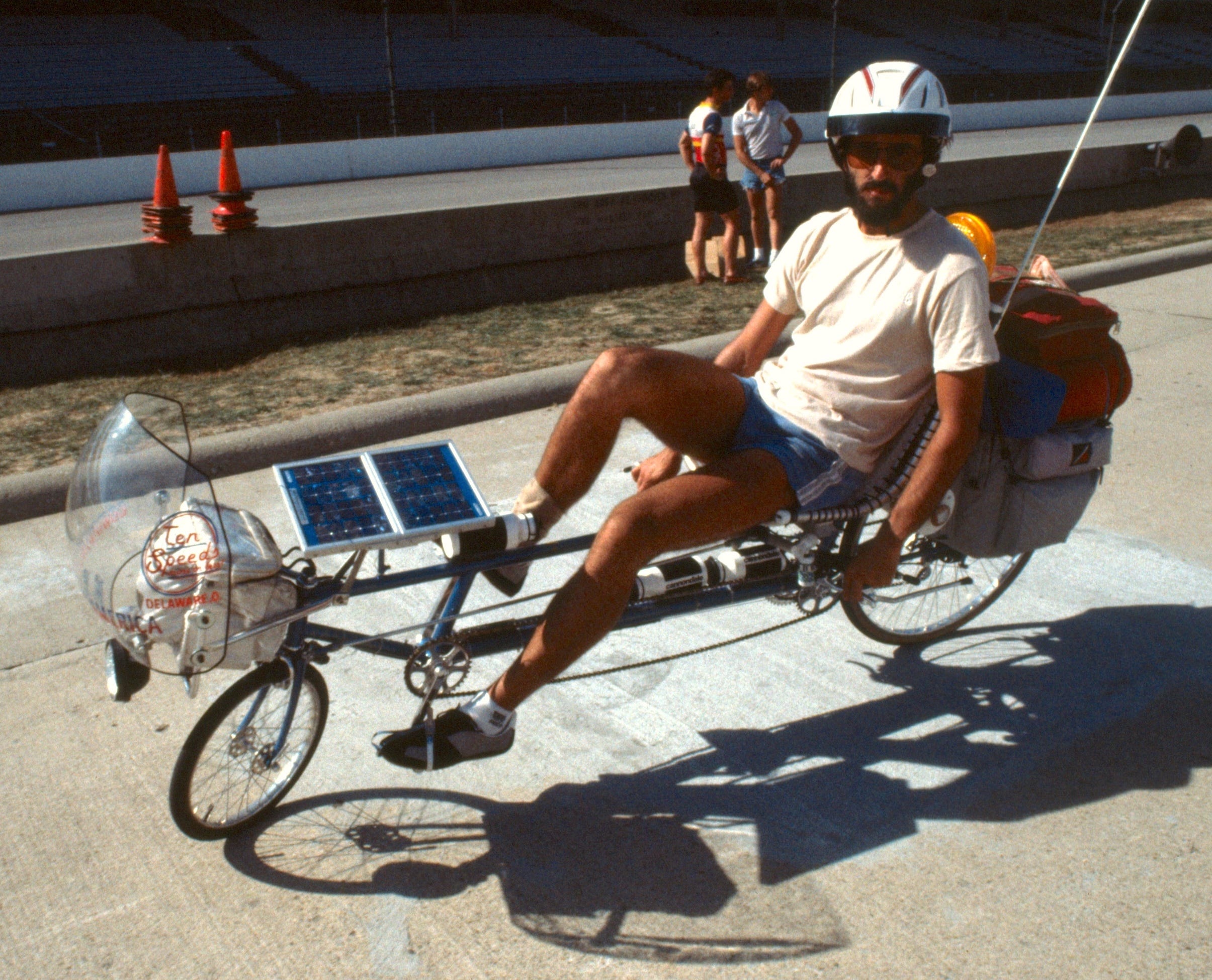
He grinned and extended his hand. “I’m Harold. My daughter Kelly works there.” I recalled the pretty blonde hostess. It’s hard to slip around incognito on a shiny eight-foot-long recumbent.
Within a few hours I had commandeered Harold’s dining room table in the suburb of Clermont and, in the fine tradition of procrastinators everywhere, attacked the article assignment in a frenzy of last-minute passion.
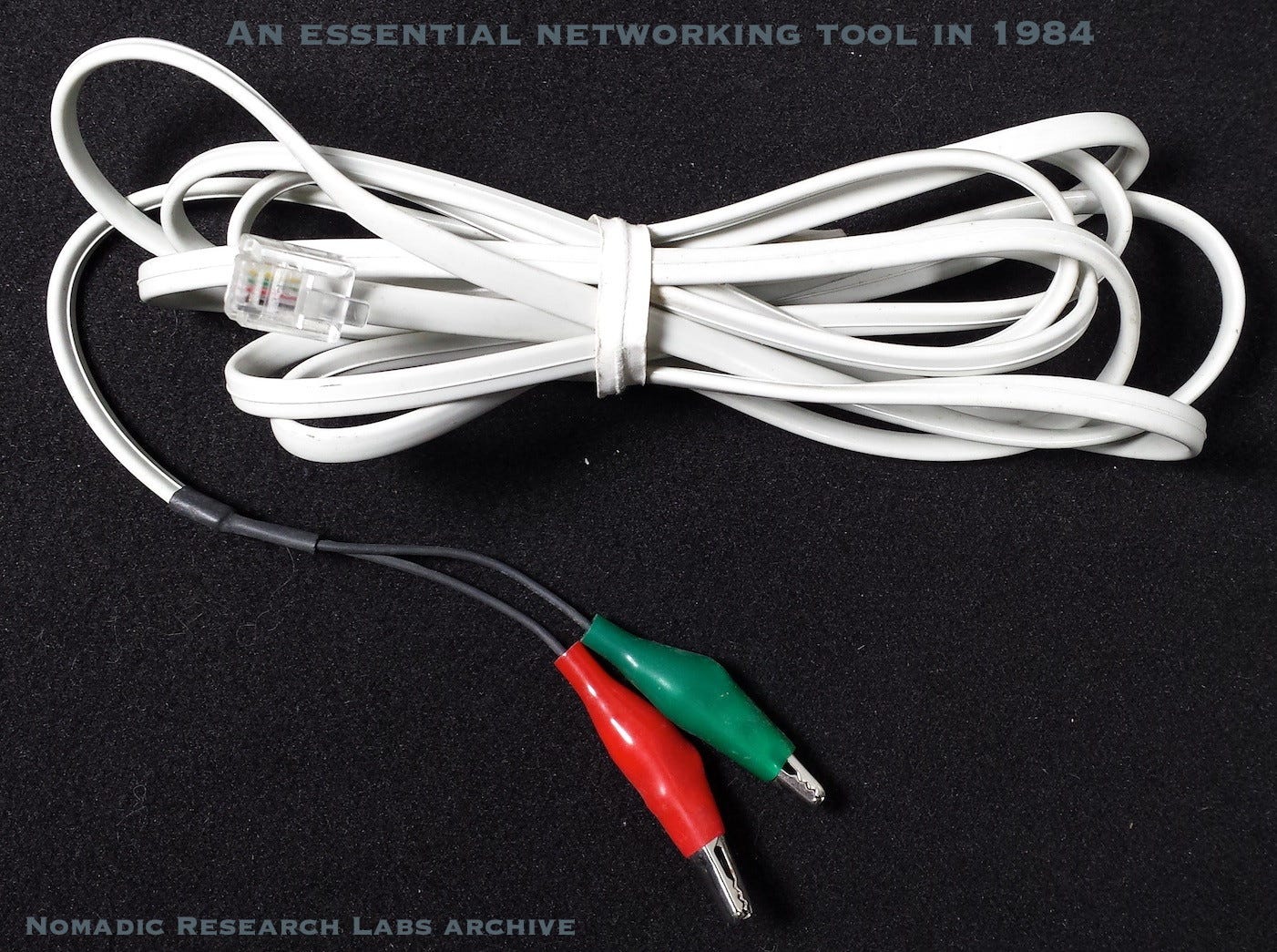
After midnight. Furtively, I removed my hosts’ telephone from their kitchen wall and plugged in the modular jack. I felt like someone in a Mission Impossible episode, hunched over a miniature computer system in a dark house, the family asleep and unaware of the data transmissions originating beside the Cuisinart. The article winged its way through the ether and came to rest on the spinning platters of a CompuServe disk drive in Columbus. In the morning, my editor at Mini-Micro Systems would sign on and transfer it to a Boston typesetting system, while Kacy would do likewise to make a copy for our files. Ain’t technology wonderful?
And then: the road! It felt like a beginning as I pedaled west out of Clermont and turned south to begin the headwind death march to Bloomington. The wind blew from the southwest with such force that I had to struggle in my almost-granny gear to progress on level ground. Minor hills were grueling from my out-of-shape perspective of the time, and traffic was unsympathetic. A jovial bald druggist in Plainfield sold me a knee support, and a drunk in Martinsburg told me I was outta my mind.
I pushed closer to Bloomington, and soon the college-town signs appeared: youth, beauty, posters, graffiti, armloads of books. That’s when the fun began…
“Oh my God!” squealed a bevy of students in that forced Midwestern dialect of Val-speak. “Look at that totally awesome bike!” I obediently stopped to allow mutual examination. The usual questions were suddenly a pleasure to answer, and I hinted that I had not decided where to stay. No response, but the evening was yet young.
I explained the bike dozens of times, glided silently between dark campus buildings, flashed my lights at other cyclists, and discovered the timeless appeal of the college town. At last, chilly and tired, I was taken in by two students who fixed me tea and pulled a classic all-nighter of test-cramming while I drifted into slumber.
Bloomington held me for a couple of days. The skies remained grey, and an exhausted torpor gripped me. Lazy and unmotivated, I hauled the bike to the top floor of a dingy building and crashed hard. Robby’s prediction had been true: everything hurt, and while my hostess had the rare opportunity to hear Kurt Vonnegut speak on campus, I slept. When I finally marshaled the energy to write, I spilled candle wax on the computer and gave up.
But about a hundred miles south in Louisville, my parents were nervously awaiting my visit — skeptical about their adopted child’s latest aberration. At first my mother had tried to dissuade me by sending newspaper clippings of people injured or robbed while traveling; when manipulation failed to have the desired effect, she tried reason. I called from Bloomington and they heard the weariness in my voice, evasion of their questions about the bad knee. It was time for a visit.
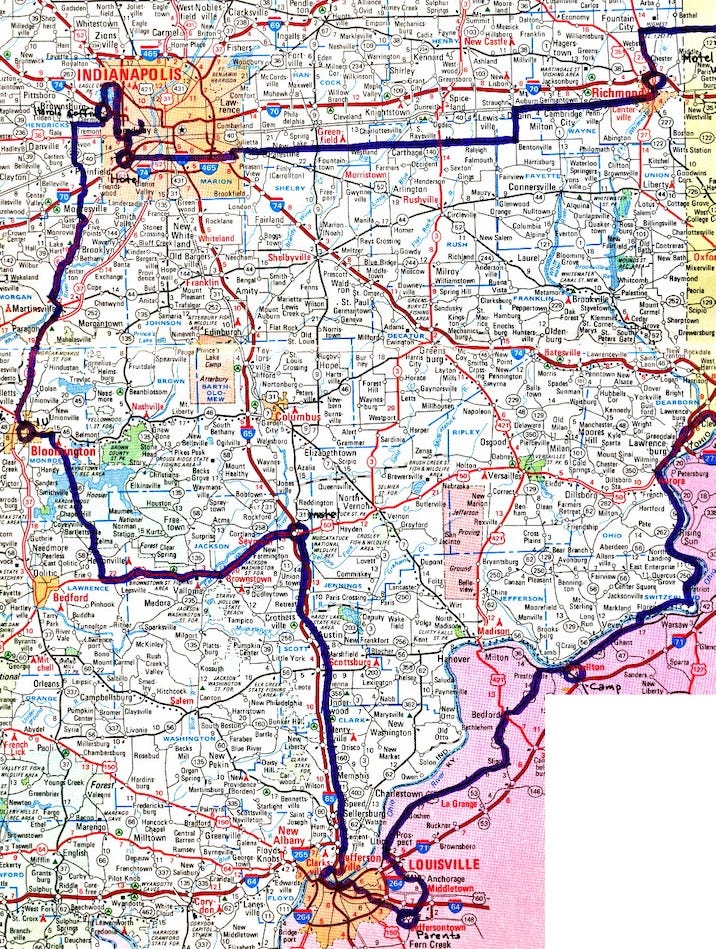
A poignant sense of the familiar struck as I crossed the Ohio River after a two-day ride to Louisville. This was my old home town, and the memories penetrating my exhaustion dwarfed the immediate problems of traffic and broken glass. If I would feel any lingering sense of home at all, it would be here.
I made a hesitant pilgrimage to the Crescent Hill house I had owned for three years. It was an 80-year-old, 13-room Victorian with stained glass and a porch swing — I stopped in my old parking spot and gazed across my lawn at countless signs of another family. Carefully crafted micro-based industrial-control systems had been born in the second-floor laboratory…
With a lump in my throat and an ache in my body I continued toward my parents.
Watching irrationally for familiar faces, I fought rush-hour traffic on roads I’ve known for years: Frankfort, Cannons, Taylorsville. I eyed with resentment the new gas stations, my quaint old Louisville gradually becoming the same place as everyplace else. I had played around a streamside weeping willow where now sprawled a condo complex; I had taken “bike hikes” along shady country roads that were now four-lane strips of muffler shops and franchised fast foods. The glimpses of buried character and stubborn hold-outs who hadn’t sold were only making it worse.
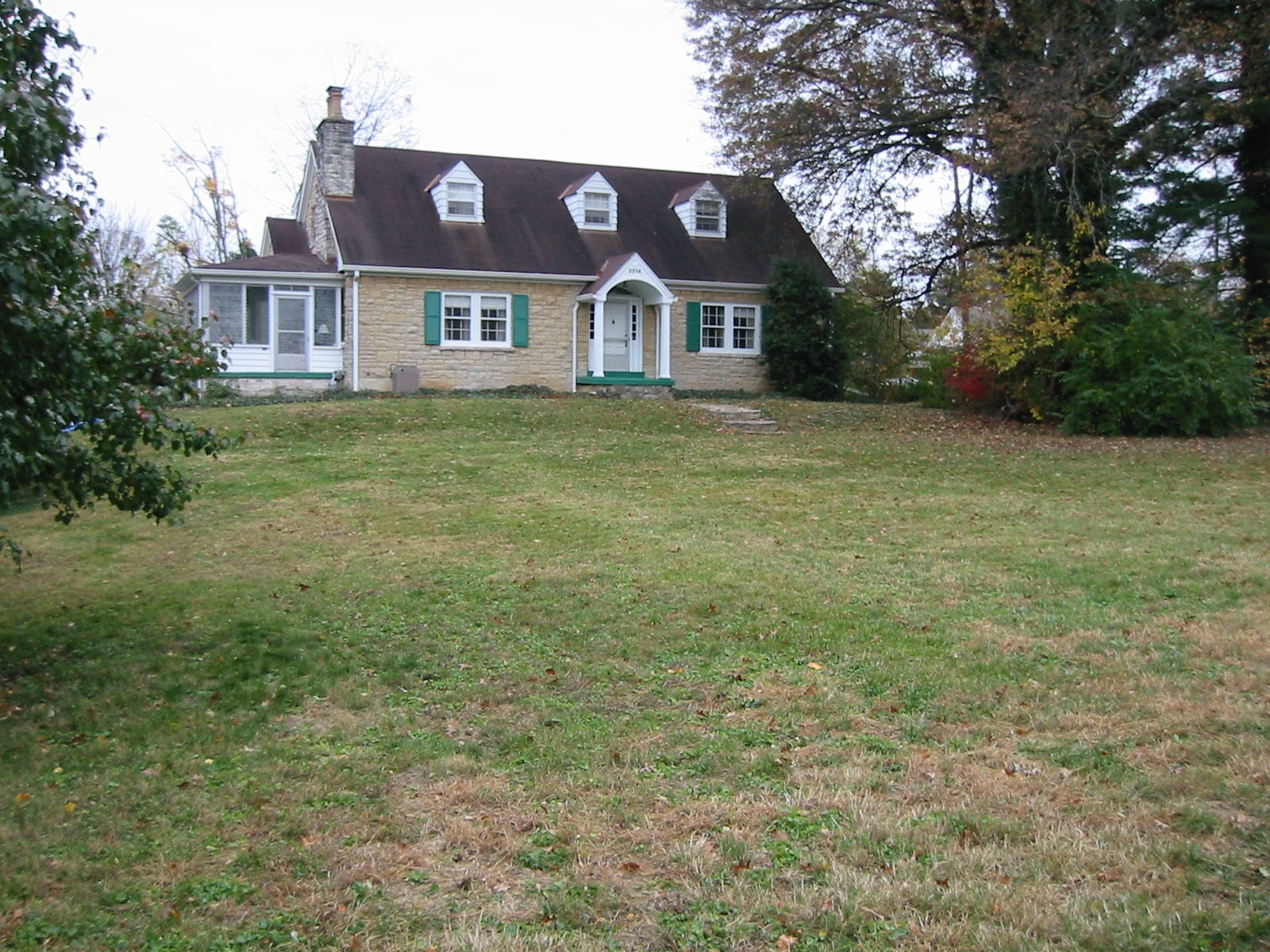
But there it was, inside the white board fence in Jeffersontown: trees bigger, stream flowing brown, mailbox freshly painted, the same cats or their descendants awaiting handouts. The greenhouse, the weathered barn, the ’63 Comet still well-maintained in the driveway — it was all there.
I parked the bike and stood unsteadily. The back door opened, and there was my mother — older than I remembered — regarding me with that classic maternal mixture of love, concern, and accusation. “My God! You must be starving!”
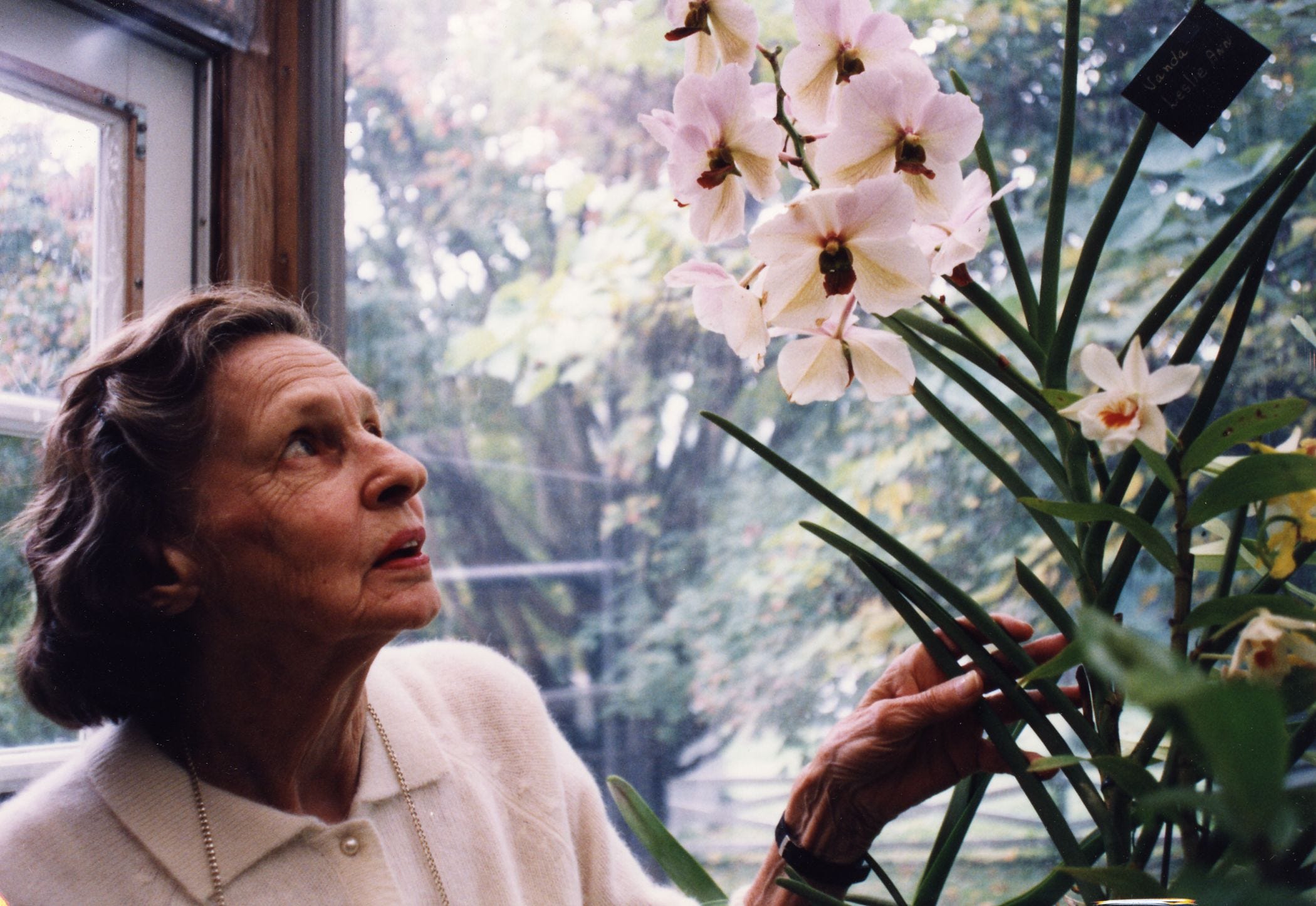
My father emerged and ran the appraising eye of a retired engineer over the bike, questioning me about spare chain links and tools. I toured the orchids and was brought up to date on barely remembered neighbors. Nothing had changed — I was still their kid at 31, and I set to work trying to reassure them about my new life.
They questioned my motives, reminded me of past aborted ventures, opened the painful subject of money, and commented on responsibility. I tried to explain, but they could see only a doomed rerun of my teenage wanderings. I gave up and spent the rest of the visit hanging with friends online. “What the hell’s he doing in there?” I heard my mother whisper on the other side of the den door as I hunkered over the antique desk, clipped to their phone line. More emotional ties were fading — Columbus had never really felt like home, and now neither did Louisville.
In the absence of tangible roots, I was free to roll down the highway. Mom packed a lunch and Dad checked my tires; I installed a new derailleur and performed the pre-flight check. Impressed by the scope of the undertaking but convinced I’d never grow up, my parents watched with ill-concealed nervousness as I piloted the Winnebiko down their driveway and out into the vast, vast world of unknowns.
The roads leading away from Louisville boosted my spirits — like the ones that had carried me out of Columbus, they were tinged with familiarity. Knowing the old, I could better sense the new, and the scenic miles of US42 delighted me.
But after a perfunctory hug-stop that rekindled fond memories, a worry began to crystallize.
Would the oft-imagined romance of this journey be just a succession of fleeting encounters? As I pedaled the curvy highway I imagined them: flashes along the slow convoluted red line of my atlas. How could a nomadic life provide enough warmth to keep me from going mad, with naught but “beginnings” to sustain me?
I would be just passing through… all the time.
I sighed at the thought as I pedaled northeast, recalling my tentative attempts at family and wondering if “beating the freedom vs security trade-off” involved having neither instead of both.

Halfway between Louisville and Cincinnati, I sat in my open tent while the Sony pumped lush jazz into my head, the candle flickering in multisensory neural synchronization. One of the purposes of this shakedown was to shift gears from stasis to nomadness, but that process was more nuanced than expected. I zipped the Domicile, gazed intently at the seams, and realized that I had not yet gotten to know my new home.
On a day bright with autumn sun and imbued with the smells of tobacco country, I rode the Indiana side of the Ohio River to Cincinnati, stopping in Patriot for lunch.
Uh-oh. The hoots and guffaws began the moment I pulled into the parking lot. I glanced uneasily across the street to the source of the noise and saw two teenagers jump into a car — the jacked-up kind associated with “youth” of the late-fifties. They screeched across the street in a smoky flash of Cragar and leapt out, chins jutting with insouciant aggression, hard-muscled arms at the ready.
“What’s this solar shit?” asked one, with a contemptuous gesture to my gleaming Solarex panels.
“Well,” I answered with a theatrically easy grin, “that runs the computer. Also the lights, stereo, CB, and security system.” I placed subtle emphasis on the word security.
“Yeah?”
“Yep! I’m crossing the United States on this machine, writing a book and doing TV shows. Haven’t you seen me on the news?”
“Whoa, you’re on TV with this thing? Where’s the motor?”
I slapped my thighs. “I’m standin’ on it, man! And I’m outta gas — anybody serve a decent lunch in this town?”
They both laughed. “Nobody around here, man. Unless you like microwave sandwiches.” The situation was totally defused, and they gazed at my bike in awe. I explained how it works, and even let one of them sit on it.
There was a lesson here. It was never stated or brought to the surface, but I had just been tested, challenged, and invited to defend myself. It would happen again. But with eye contact, I touched the human parts below the veneer of machismo; I shared something of myself and eased them into doing the same.
The scary ones are those who won’t meet my gaze. If I can’t look someone in the eye and quickly evolve from harrassable stranger to fellow human, I’m in trouble.
I would wear no sunglasses on this journey.
After a poignant weekend reminder of what might have been, I fought my way out of Cincinnati in a downpour — banished from the limited-access Reed Hartman Highway by a cop. As I neared the suburb of Sharonville in heavy construction traffic, I had my first wreck.
A once-white Buick loomed heavy and terrifying in my helmet mirror. There would be no escape… as I watched in slow-motion disbelief and hollered a futile “Hey!” the bent old woman piloted the whale into my space, crowding me against the slippery curb. With a curse I slid face-first into a sea of sticky mud, soiling the new rainsuit, bending the steering linkage, and demolishing all notions of invincibility that my wondrous electronic bicycle may once have offered.
She never even noticed.

Unhurt but furious, I pressed on into the rain. I remember nothing of the land, nothing of the culture — only loneliness and numb sodden feet. I vaguely recall arriving at the Caesar Creek youth hostel, dragging my muddy machine onto their porch and conjuring a confused patchwork dinner of anything, anything at all.
What was this all about, really? Huddled beneath musty army blankets in the men’s bunkroom, I shivered in Ohio pre-winter gloom and tried to recall the passion that had inspired six months of frenzied preparation, the giddy rationalizations that had answered everyone’s questions about what I was up to.
This shakedown was a life nexus. The choices were still shifting, yet the decisions that fell out of this would define my next half-century. Let momentum carry me forward on the path of least resistance, or allow the road-weariness of a nomadic neophyte induce hard-nosed rationality? Either way, the bridges were already burning…
By late afternoon of the next day, I was cruising toward Columbus on a brisk tailwind — static falling away from familiar FM stations, the landmarks again suburban. Arriving in Dublin was an odd mix of passing through and coming home; exuberant, victorious, and excited about seeing Elisse again, I headed for the nearest pay phone.
“Elisse? Hi!!!”
“Hello, Steve.”
“I just got back from the shakedown — 762.4 miles! I’m at the Dublin Plaza — “
“Uh-huh.”
“Feel like getting together?”
“No, I don’t think so.”
A chill passed through me like blue lights in the mirror, IRS envelopes in the mail, and 3 a.m. phone calls. “What? Honey, I miss you.”
“I don’t want to go through it all again, Steve.”
Now I felt like an outsider here, too. Suddenly homeless and disoriented, I appealed to her. “Elisse… it’s gonna be a grim week. My house is probably half-vacant by now, I have no phone, and there’s a huge list of things to do. I need warmth. I need you.”
“You had me.”
“I need you now.”
“You’re never coming back to Columbus, are you?”
“I’ll visit periodically. I don’t know.”
She was silent.
“Elisse…”
“Why do I let you do this to me? Alright. Just don’t make any promises you won’t keep, OK?”
“Thank you… seriously. I’ll be there in an hour or so — I want to stop by the house. Want me to pick up a pizza?”
With something barely audible, she hung up the phone. But there was a need, a strong one, and it had more to do with hearth than fire.
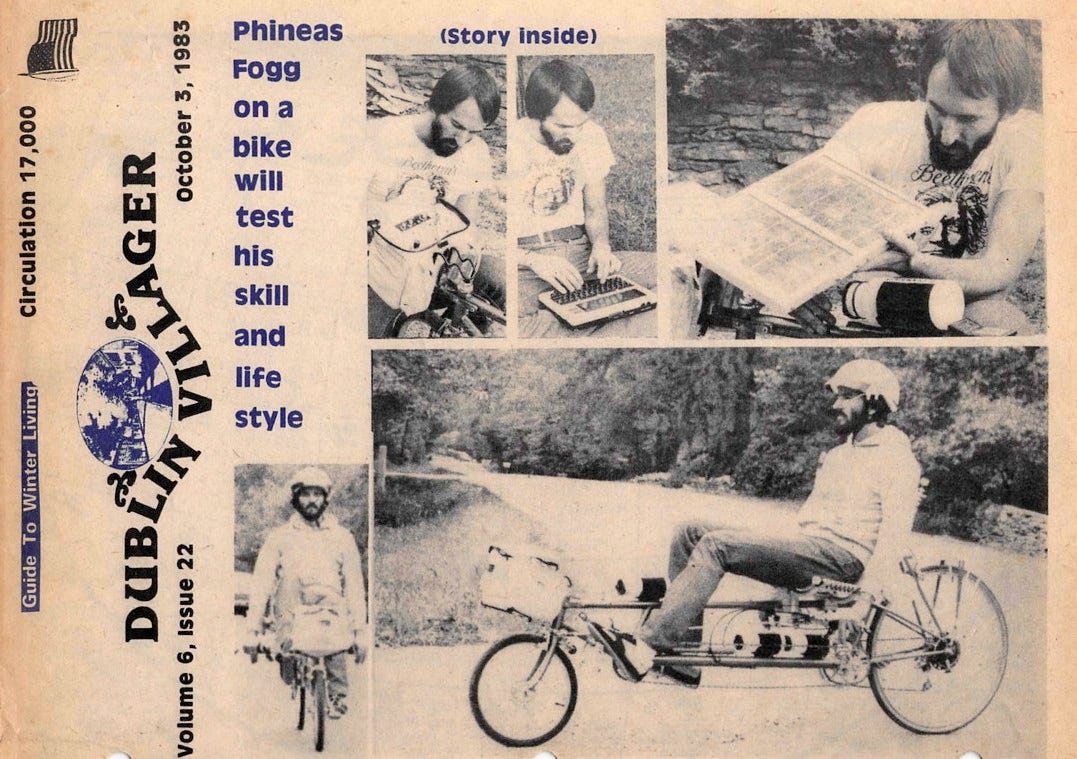
I climbed back on the bike and lumbered down Dublin Road. The house looked the same outside, tall grass matted from rain, bags of advertising litter hanging mildewed from the doorknob. A mushy Dublin Villager contained a gushy story about my trip, and I stood on the porch reading and wincing in embarrassment. “Only the sands of time record Steve Roberts’ journey and whether it was a success or failure.” Hmm. With a wave to a passing neighbor I let myself in.
Though I had lived in that house for four years and been gone but two weeks, it was stuffy, cluttered, alien — and no longer home. A pile of clutter had replaced my desk. Books were in disarray, flies buzzed around, and something in the kitchen had died, come to life, or both. I poked around halfheartedly. It was mine but not-mine; possessions once treasured were now just stuff. It could have been a warehouse or somebody else’s house or anything but my house, and there was no reason for me to stay another minute.
With a sadness that I couldn’t quite articulate, I closed the door and took myself to Elisse.